comparison
Arthrosamid vs Hyaluronic Acid: Which Is Better?
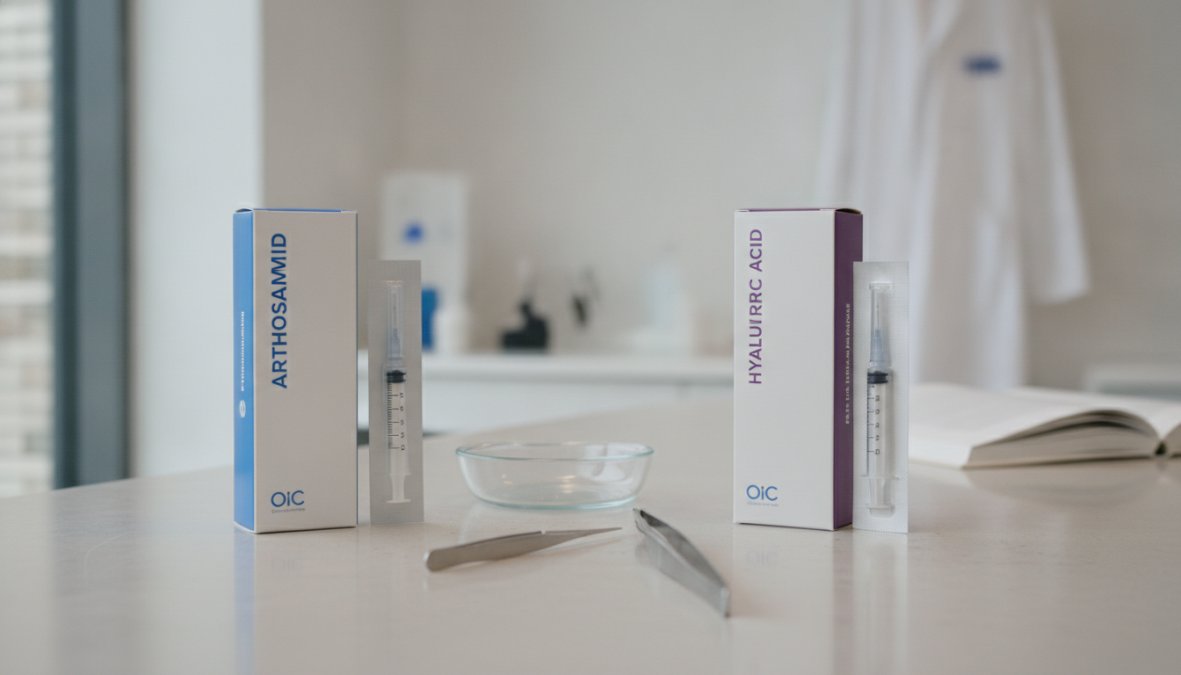
Table of Contents
- Arthrosamid vs Hyaluronic Acid: Key Differences at a Glance
- How Polyacrylamide Hydrogel Works in the Knee
- Long-Term Effects of Arthrosamid vs Hyaluronic Acid
- Arthrosamid FDA Approval Status and Availability
Arthrosamid vs Hyaluronic Acid: Which Is Better?
Last Updated: July 16, 2026
Arthrosamid vs Hyaluronic Acid: Key Differences at a Glance
Arthrosamid is a polyacrylamide hydrogel, a non-biodegradable polymer that integrates into the synovial membrane and creates a permanent mechanical cushion. Hyaluronic acid is a naturally occurring viscosupplement that lubricates and absorbs shock but is gradually metabolized over months.
The core difference is permanence versus temporary relief. Arthrosamid offers potential pain relief lasting 2-3 years or longer, while hyaluronic acid typically provides 4-6 months of benefit before requiring repeat treatment.
| Aspect | Arthrosamid | Hyaluronic Acid |
|---|---|---|
| Composition | Polyacrylamide hydrogel (2.5% polymer, 97.5% water) | Natural viscoelastic fluid |
| Biodegradability | Non-biodegradable; permanent implant | Biodegradable; absorbed over 4-6 months |
| Injection Protocol | Single injection | Single or series (1-3 injections) |
| Typical Duration | 2-3+ years | 4-6 months per course |
| FDA Status (US) | Not FDA-approved | FDA-approved |
| Mechanism | Integrates into synovial membrane; mechanical cushioning | Lubricates joint; absorbs shock; anti-inflammatory |
| Best For | Advanced OA, failed conservative therapy, surgery delay | Mild-to-moderate OA, first-line viscosupplement |
How Polyacrylamide Hydrogel Works in the Knee
When injected under ultrasound guidance, Arthrosamid's cross-linked polymer absorbs water and swells to fill the injection volume. Over weeks, it becomes incorporated into synovial tissue, acting as a mechanical buffer between cartilage surfaces, reducing friction and offloading stress from damaged cartilage.
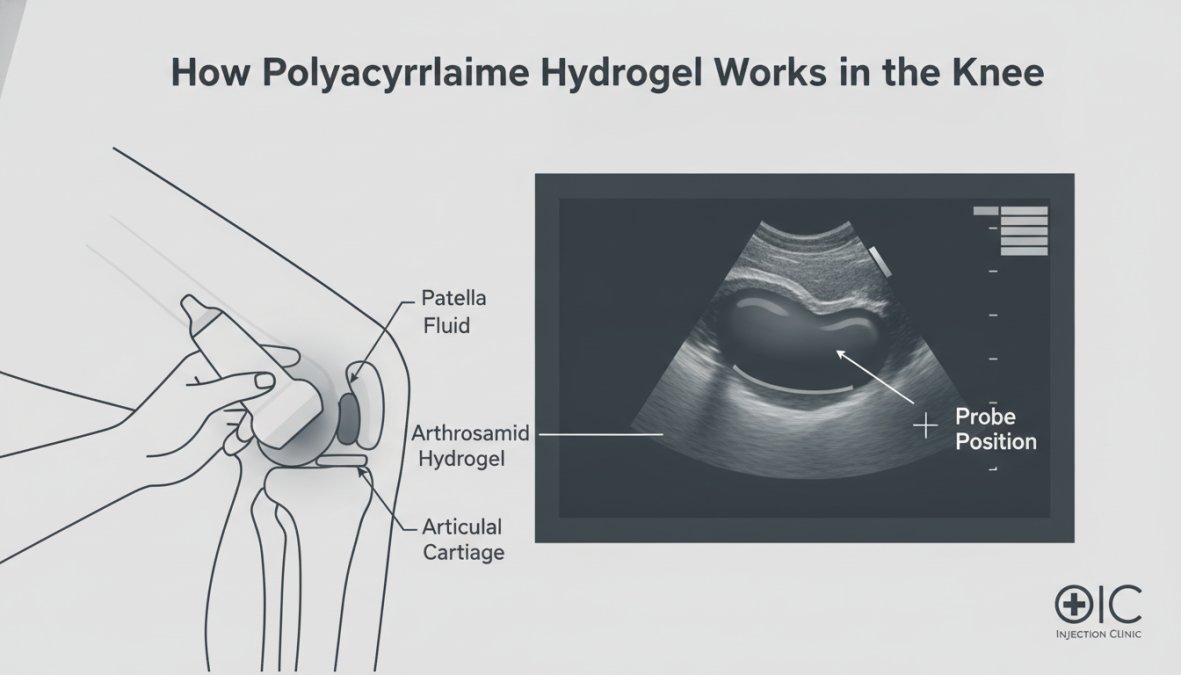
The polyacrylamide polymer is biocompatible and does not degrade, migrate, or trigger systemic immune responses. It remains localized within the joint capsule, maintaining structural integrity for years.
Hyaluronic acid works through viscosity and elasticity. When injected, it increases the viscoelastic properties of synovial fluid, allowing better shock absorption and load distribution. Enzymatic processes break down the exogenous hyaluronic acid over time, necessitating repeat courses.
Long-Term Effects of Arthrosamid vs Hyaluronic Acid
Early clinical data suggests Arthrosamid patients report sustained pain reduction for 2-3 years, with some cohorts maintaining benefit for 5 years post-injection. Hyaluronic acid's duration is more predictable but shorter, most patients experience peak benefit at 2-4 weeks, with pain relief gradually declining over 4-6 months.
This difference has profound implications for patient burden. A patient receiving hyaluronic acid every 6 months requires 4-5 injections over 2 years. An Arthrosamid patient may require only a single injection during the same period, reducing clinic visits and cumulative injection-site risks.
However, Arthrosamid's permanence carries a trade-off. If a patient experiences an unexpected adverse reaction or if the treatment proves ineffective, the hydrogel cannot be removed. For patients in early osteoarthritis stages (Kellgren-Lawrence grades 1-2), hyaluronic acid remains a reasonable first-line option. For those with moderate-to-advanced disease (grades 3-4) who have exhausted conservative management, Arthrosamid offers durable pain control.
Arthrosamid FDA Approval Status and Availability
In the United States, Arthrosamid has not received FDA approval and is not available through standard clinical channels or covered by Medicare or private insurance. In Europe, the United Kingdom, Australia, and Canada, Arthrosamid has received regulatory clearance and is available through specialist orthopedic and rheumatology clinics.
For patients seeking Arthrosamid in available regions, access typically requires specialist consultation and ultrasound-guided MSK diagnostic scans to confirm intra-articular pathology and rule out contraindications before injection.
Clinical Efficacy and Patient-Reported Outcomes
The ROSA study found Arthrosamid patients reported greater pain reduction at 12 months compared to hyaluronic acid recipients, with sustained benefit extending beyond 24 months. Patient-reported outcome measures including WOMAC and VAS pain scores show Arthrosamid users experience steeper initial pain reduction and a longer plateau of benefit.
Functional mobility, measured by walking distance and stair-climbing ability, tends to improve more substantially and persistently with Arthrosamid. However, individual variability is high. Patient selection and baseline disease severity are critical predictors of response.
Suitability by Osteoarthritis Stage and Medical History
Early-stage osteoarthritis (Kellgren-Lawrence grade 1-2) typically responds well to conservative measures: physiotherapy, weight management, activity modification, and oral analgesics. When conservative therapy plateaus, hyaluronic acid is a reasonable first-line injectable option.
Moderate osteoarthritis (grade 3) with persistent pain despite conservative therapy and previous hyaluronic acid courses is where Arthrosamid becomes compelling. Advanced osteoarthritis (grade 4) with severe joint space narrowing is typically better suited for surgical intervention, though Arthrosamid may delay surgery by 1-2 years in select cases.
Medical history exclusions include active joint infection, severe systemic inflammatory conditions, and allergies to polyacrylamide or hyaluronic acid precursors. Pregnancy and lactation are relative contraindications for both.
Post-Injection Rehabilitation and Long-Term Management
Injection alone is insufficient for optimal outcomes. After injection, patients should follow structured physiotherapy emphasizing joint mobility, muscular strength, and proprioceptive control. The first 48 hours involve relative rest and ice application. Gentle range-of-motion exercises begin by day 3-5, progressing to strengthening of the quadriceps, hamstrings, and hip abductors over 4-6 weeks.
Hyaluronic acid recipients often experience peak benefit at 4-6 weeks post-injection. Arthrosamid patients benefit from extended rehabilitation spanning 8-12 weeks to allow full hydrogel integration. Weight management, activity modification, and ongoing home exercise programs are essential for long-term success with either treatment.
Insurance Coverage and Regional Accessibility
Hyaluronic acid injections are covered by Medicare and most private insurance plans in the US when medically indicated. Arthrosamid, lacking FDA approval in the US, is not covered by insurance and is available only as private-pay treatment. In approved regions, coverage varies by health system. This accessibility gap means Arthrosamid remains an option primarily for patients with financial resources or access to private specialist care.
Side Effects, Safety Profile, and Contraindications
Both treatments carry low rates of serious adverse events when injected under proper aseptic technique and ultrasound guidance. The most common side effects are transient and localized: post-injection pain, swelling, warmth, and stiffness lasting 24-72 hours.
Serious adverse events are rare. Intra-articular infection can occur with either treatment if aseptic technique is breached. Arthrosamid's permanent nature introduces a unique safety consideration: if an unexpected adverse reaction occurs, the hydrogel cannot be removed without significant surgical intervention. Hyaluronic acid's temporary nature means any adverse effect resolves as the substance is metabolized.
Contraindications for both treatments include active joint infection, severe systemic inflammatory conditions, anticoagulation therapy, pregnancy and lactation, and allergy to treatment components.
Making the Decision: Arthrosamid or Hyaluronic Acid?
Choose hyaluronic acid if:
- Mild-to-moderate osteoarthritis (grades 1-3)
- Patient prefers reversible treatment
- Insurance coverage is important
- Patient tolerates repeated injections every 6 months
Choose Arthrosamid if:
- Moderate-to-advanced osteoarthritis (grades 3-4) with failed hyaluronic acid courses
- Patient seeks durable pain relief lasting 2+ years
- Treatment burden reduction is a priority
- Patient is motivated to delay or avoid knee replacement surgery
- Access is available and pre-injection imaging confirms suitability
Neither treatment is universally superior. Arthrosamid offers longer-lasting benefit and reduced treatment burden but carries permanence and regulatory limitations. Hyaluronic acid is accessible, reversible, and well-established but requires repeated courses. A staged approach works well for many patients: hyaluronic acid as first-line injectable, then Arthrosamid if responses plateau.
When conservative therapy reaches its limits, injectable treatments offer a bridge toward sustained function and pain relief. Whether Arthrosamid's durable approach or hyaluronic acid's reversible option is better depends entirely on your osteoarthritis stage and what outcomes matter most. Oxford Injection Clinic combines ultrasound-guided diagnostic assessment with precision injection delivery and structured post-injection rehabilitation to recommend the treatment pathway most likely to restore your mobility and reduce reliance on painkillers. Book a consultation today to explore your best options.
Frequently Asked Questions
What is the main difference between Arthrosamid and hyaluronic acid for knee osteoarthritis?
Arthrosamid is a non-biodegradable polyacrylamide hydrogel that integrates into the synovial membrane, creating a permanent cushion. Hyaluronic acid is a viscosupplement that lubricates the joint but is gradually absorbed by the body. Arthrosamid offers potentially 2-3+ years of relief, while hyaluronic acid typically provides 6 months of pain relief.
How long does Arthrosamid last compared to hyaluronic acid injections?
Arthrosamid can provide long-term pain relief lasting 2-3 years or longer, with some clinical data suggesting benefits up to 5 years. Hyaluronic acid injections typically offer pain relief for up to 6 months, requiring repeat treatments for sustained benefit. This significant difference in duration makes Arthrosamid attractive for patients seeking longer-lasting results.
Is Arthrosamid FDA-approved and available in the United States?
Arthrosamid is not FDA-approved in the US, which limits its availability and insurance coverage for American patients. However, it is available in other countries and has been used successfully in clinical practice internationally. Hyaluronic acid injections like Synvisc-One are FDA-approved and widely available in the US with established insurance pathways.
Which treatment is better for severe knee osteoarthritis, Arthrosamid or hyaluronic acid?
For advanced knee osteoarthritis, Arthrosamid may be more suitable due to its longer-lasting pain relief and potential to delay knee replacement surgery. However, hyaluronic acid remains a proven option for mild to moderate OA. The best choice depends on your specific stage of disease, previous treatment responses, and access to each option. Ultrasound-guided MSK diagnostic assessment can help determine which is most appropriate for your condition.
What are the side effects and safety differences between Arthrosamid and hyaluronic acid?
Both treatments are generally well-tolerated. Hyaluronic acid has a well-established safety profile from decades of use; however, rooster-comb-derived versions may concern patients with avian allergies. Arthrosamid is a permanent implant, so adverse reactions cannot be reversed. Both can cause transient injection-site reactions. Contraindications include active infection, certain anticoagulation therapies, and pregnancy. Consult your specialist to assess your medical history before treatment.
This article was written using GrandRanker