how-to guide
Manage Chronic Knee Pain: Evidence-Based Steps
Table of Contents
- Understanding Chronic Knee Pain: Causes and Diagnosis
- Step 1: Immediate Pain Relief - RICE and MEAT Methods
- Step 2: Medication for Chronic Knee Pain Management
- Step 3: Exercises for Chronic Knee Pain and Strength
- Step 4: Physical Therapy for Knee Pain Recovery
- Step 5: Home Remedies and Lifestyle Modifications
- Managing the Psychological Impact of Chronic Knee Pain
- How to Manage Chronic Knee Pain Long-Term
Last Updated: July 15, 2026
Understanding chronic knee pain requires a practical, evidence-based approach. Persistent knee discomfort affecting daily activities is one of the most common joint complaints. At Oxford Injection Clinic, we help patients develop personalized strategies for managing chronic knee pain without relying solely on painkillers or invasive procedures. Below, we'll walk you through immediate relief techniques, targeted exercises, professional treatment options, and lifestyle modifications that work.
Chronic knee pain rarely has a single cause or solution. What works for one person may not work for another, which is why understanding the full spectrum of management options is essential. Research from the American [Physical Therapy(/oxford-physiotherapy) Association | apta.org] emphasizes that multimodal approaches combining exercise, activity modification, and professional guidance produce the best long-term outcomes.
Understanding Chronic Knee Pain: Causes and Diagnosis
Chronic knee pain develops when discomfort persists for more than six weeks, often stemming from wear and tear, movement patterns, or structural changes in the joint. Common underlying conditions include osteoarthritis, where cartilage gradually deteriorates, and patellofemoral pain, which involves irritation around the kneecap. Other causes include ligament injuries, muscle imbalances, or inflammation from overuse.
Distinguishing between acute pain (sudden onset from injury) and chronic pain matters because management approaches differ significantly. Acute pain typically improves with rest and ice. Chronic pain requires active rehabilitation, consistent exercise, and often professional assessment to identify the underlying cause.
When to Seek Professional Assessment
Schedule a consultation with a healthcare provider if your knee pain persists beyond two weeks, worsens despite home treatment, or significantly limits your mobility. Professional assessment becomes especially important if you experience swelling that doesn't improve with ice and elevation, instability in the knee joint, or pain that wakes you at night.
A proper diagnosis often involves imaging like ultrasound or MRI to rule out structural damage. At Oxford Injection Clinic, ultrasound-guided assessment allows specialists to see exactly what's happening inside your knee and recommend treatments with precision. Early professional evaluation prevents compensation patterns, where you unconsciously change your gait to avoid pain, creating secondary problems in your hips, lower back, or other knee.
Step 1: Immediate Pain Relief - RICE and MEAT Methods
The RICE method, Rest, Ice, Compression, Elevation, remains a foundational immediate response for knee pain flare-ups. Rest means reducing aggravating activities, not complete immobilization. Ice applied for 15-20 minutes several times daily reduces inflammation and numbs discomfort. Compression using an elastic bandage or sleeve supports the joint and controls swelling. Elevation above heart level helps fluid drain from the affected area.
However, modern sports medicine increasingly emphasizes the MEAT method for chronic conditions: Movement, Exercise, Analgesics, and Treatment. This approach recognizes that complete rest weakens supporting muscles and stiffens joints. Instead, gentle movement within your pain tolerance maintains range of motion and strengthens stabilizing muscles.
Use RICE for acute flare-ups lasting a few days, then transition to MEAT principles for ongoing management. Many people find that 48 hours of RICE followed by gradual reintroduction of activity produces better long-term results than extended rest.
Step 2: Medication for Chronic Knee Pain Management
Over-the-counter NSAIDs like ibuprofen and naproxen reduce inflammation and pain by blocking inflammatory pathways in the joint. These work best when taken consistently during flare-ups rather than sporadically. However, long-term daily use carries risks including gastrointestinal issues and cardiovascular effects, so NSAIDs work best as short-term interventions.
Acetaminophen offers pain relief without anti-inflammatory action, making it gentler on the stomach but less effective for inflammation-driven pain.
When Prescription or Injectable Options May Help
If over-the-counter medications provide insufficient relief after several weeks, prescription-strength NSAIDs or topical pain-relieving creams may help. Injections represent a more targeted approach. Steroid injections reduce inflammation directly in the joint, providing relief lasting weeks to months. Hyaluronic acid injections mimic the joint's natural lubricant, improving movement and reducing friction. At Oxford Injection Clinic, these injections are delivered under ultrasound guidance, ensuring precise placement and maximizing effectiveness.
Injectable treatments work best when combined with physical therapy and exercise. They reduce pain enough to allow you to participate in strengthening work that addresses the underlying problem. We also specialise in Arthrosamid injections which can give you long lasting pain relief up to 24 months and more.
Step 3: Exercises for Chronic Knee Pain and Strength
Strengthening the muscles supporting your knee, particularly the quadriceps, hamstrings, glutes, and hip stabilizers, is perhaps the single most important intervention for long-term pain management. Weak supporting muscles force the knee joint itself to absorb more force during movement, accelerating wear and increasing pain.
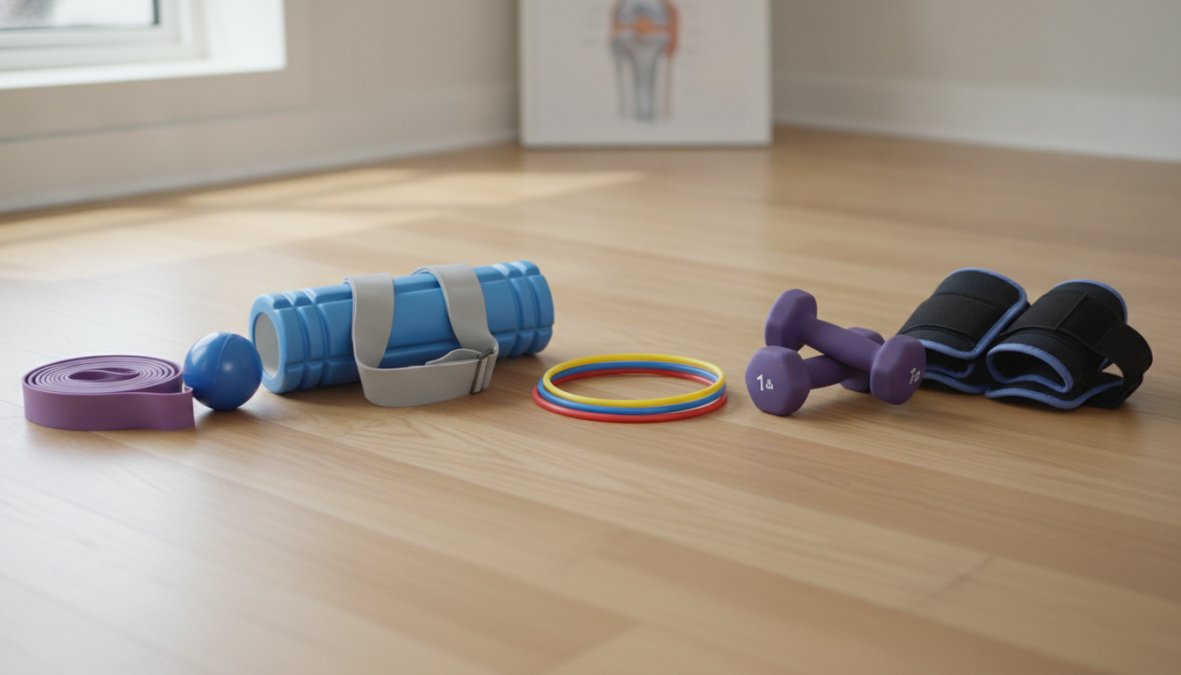
Low-Impact Options: Swimming and Cycling
Swimming and water-based exercise are exceptional for knee pain because water's buoyancy removes most of your body weight from the joint while resistance strengthens muscles. Even gentle swimming or water walking for 20-30 minutes, three times weekly, significantly improves strength and reduces pain.
Stationary cycling offers similar benefits; your body weight rests on the seat rather than the joint, and the pedaling motion moves the knee through its full range without impact. Start with low resistance and moderate cadence, focusing on smooth, controlled movement rather than intensity.
Strengthening and Range of Motion Routines
Effective knee pain management requires consistent, targeted exercises addressing multiple muscle groups:
Quadriceps Sets (sitting or lying down): Tighten the thigh muscle above the knee, hold for 3 seconds, release. Perform 15 repetitions, 2-3 times daily.
Straight Leg Raises (lying on your back): Straighten one leg and lift it 12 inches off the ground, hold 2 seconds, lower slowly. Perform 10-12 repetitions per leg for 2-3 sets.
Glute Bridges (lying on your back, knees bent): Push through your heels to lift your hips off the ground until your body forms a straight line from knees to shoulders. Hold 2 seconds, lower slowly. Perform 12-15 repetitions for 2-3 sets.
Calf Raises (standing, holding onto a counter): Rise up onto your toes, hold 1 second, lower slowly. Perform 15-20 repetitions for 2-3 sets.
Hamstring Curls (standing, holding a counter): Bend one knee, bringing your heel toward your buttock, hold 1 second, straighten slowly. Perform 10-12 repetitions per leg for 2-3 sets.
Perform these exercises 4-5 days weekly, not on consecutive days. Start with one set of each exercise, progressing to 2-3 sets over 2-3 weeks as strength improves. Consistency matters more than intensity.
Exercise | Reps | Sets | Frequency | Key Benefit |
|---|---|---|---|---|
Quadriceps sets | 15 | 2-3 | Daily | Activates primary knee support |
Straight leg raises | 10-12 | 2-3 | 4-5x/week | Strengthens quadriceps |
Glute bridges | 12-15 | 2-3 | 4-5x/week | Stabilizes pelvis and knee |
Calf raises | 15-20 | 2-3 | 4-5x/week | Improves overall leg stability |
Hamstring curls | 10-12 | 2-3 | 4-5x/week | Balances quadriceps strength |
Step 4: Physical Therapy for Knee Pain Recovery
Professional physical therapy provides personalized exercise prescription, hands-on treatment, and movement correction that self-directed exercise often misses. A physical therapist assesses your specific movement patterns, identifies muscle imbalances or restrictions, and designs a program targeting your exact limitations.
Rehabilitation protocols typically progress through phases: initial pain management and gentle mobilization, followed by progressive strengthening, then activity-specific training. This structured approach prevents advancing exercises too quickly, which can trigger pain flare-ups.
Physical therapy also addresses range of motion limitations. Many people with chronic knee pain develop stiffness; the knee won't bend or straighten fully. Gentle stretching combined with movement-based exercises gradually restores normal range, often producing dramatic pain relief.
Step 5: Home Remedies and Lifestyle Modifications
Beyond formal exercise, daily habits significantly impact knee pain. Weight management directly reduces joint stress; each pound of excess body weight increases force through the knee by roughly three pounds during walking. Even modest weight loss of 5-10 pounds often produces noticeable pain reduction.
Anti-inflammatory nutrition supports joint health. Foods rich in omega-3 fatty acids (fatty fish, walnuts, flaxseeds), colorful vegetables high in antioxidants, and spices like turmeric contain compounds that reduce inflammation.
Ergonomic Adjustments and Assistive Devices
Proper desk ergonomics, monitor at eye level, elbows at 90 degrees, feet flat on floor, prevents compensatory strain. When sitting for extended periods, periodically stand and walk, as sustained flexed knee positions increase stiffness.
Assistive devices reduce joint stress during activities that trigger pain. Knee braces provide compression and proprioceptive feedback. Proper footwear with good arch support and cushioning reduces impact transmission to the knee. Trekking poles during walking redistribute weight and reduce knee loading by 15-20 percent.
Stairs and inclines stress the knee more than level walking. When stairs aggravate pain, use a handrail, take stairs one at a time, or temporarily use an elevator while you build strength.
Managing the Psychological Impact of Chronic Knee Pain
Chronic pain creates psychological burden that, if unaddressed, worsens the pain experience itself. Fear of movement often prevents the very activity that would improve pain. Understanding that exercise strengthens rather than damages the knee reduces fear. Gradually increasing activity despite mild discomfort builds confidence and breaks the pain-avoidance cycle.
Many people find that pain management works best when combined with stress reduction practices like meditation, deep breathing, or gentle yoga. These practices reduce overall tension and inflammatory markers, creating an environment where physical recovery progresses faster.
How to Manage Chronic Knee Pain Long-Term
Sustainable pain management requires viewing it as an ongoing practice rather than a problem to "fix" and forget. Consistency matters more than intensity. Most people need to continue strength and flexibility work indefinitely, though the time investment typically decreases as exercises become habit.
Monitoring Progress and Adjusting Your Approach
Track your pain using a simple 0-10 scale and note what activities aggravate or improve it. After 4-6 weeks of consistent management, you should notice measurable improvement: less frequent pain, better movement quality, or improved activity tolerance. If progress stalls, your current approach may need adjustment.
Regular check-ins with a physical therapist every 3-6 months help ensure your program remains appropriate as your strength improves.
When to Explore Advanced Treatments
If conservative management provides insufficient relief after 8-12 weeks of consistent effort, advanced treatments deserve consideration. Injections reduce inflammation enough to allow more effective rehabilitation. In rare cases where conservative management fails and pain significantly limits quality of life, surgical options exist, but these are typically considered only after exhausting non-surgical approaches.
Research from the American Academy of Orthopaedic Surgeons shows that most people with chronic knee pain improve with conservative management, particularly when combining exercise with professional guidance.
Chronic knee pain responds best to a comprehensive approach combining immediate relief techniques, consistent exercise, professional guidance when needed, and lifestyle modifications that reduce joint stress. Oxford Injection Clinic specializes in this multimodal approach, combining ultrasound-guided injections that reduce inflammation with structured physical therapy and exercise prescription. If conservative management alone isn't producing the results you need, their consultant-led team provides precise diagnostic assessment and targeted treatment options designed to get you moving without pain. Book a consultation with Oxford Injection Clinic and discover how personalized, evidence-based care can transform your knee health.
Frequently Asked Questions
What is the fastest way to relieve chronic knee pain?
The fastest relief typically combines immediate RICE method (rest, ice, compression, elevation) with over-the-counter NSAIDs for acute inflammation. However, lasting pain management requires a multi-step approach: targeted medication, physical therapy exercises, and lifestyle modifications. For patients seeking faster results, diagnostic ultrasound scan with ultrasound-guided injections—such as steroid or hyaluronic acid treatments—can provide rapid relief while you build strength through exercise and rehabilitation. Also we do joint aspiration when indicated. Arthrosamid injections can provide long tern pain relief for knee OA
What are the best exercises for chronic knee pain?
Low-impact exercises are safest: swimming and cycling reduce joint stress while building strength. Strengthening exercises targeting the quadriceps and hamstrings improve knee stability. Stretching routines enhance range of motion and reduce stiffness. Physical therapy programs personalize these based on your specific diagnosis—whether osteoarthritis or patellofemoral pain. Start with guided exercises under professional supervision to ensure proper form and prevent re-injury.
Can medication alone cure chronic knee pain?
Medication—including NSAIDs and injectable treatments—manages pain and inflammation effectively, but does not cure the underlying condition. Long-term resolution requires combining medication with physical therapy, strengthening exercises, weight management, and lifestyle modifications. This integrated approach addresses both symptoms and joint health, helping you restore mobility and reduce dependence on daily painkillers while potentially delaying or avoiding surgery.
When should I see a doctor for chronic knee pain?
Seek professional assessment if knee pain persists beyond 2-3 weeks, limits daily activities, causes swelling or instability, or follows an injury. Early diagnosis—through ultrasound or clinical examination—identifies whether you have osteoarthritis, ligament damage, or other conditions. A specialist can rule out serious issues and design a personalized management plan combining physical therapy, medication, and targeted injections if needed, helping you avoid unnecessary surgery.
This article was written using GrandRanker